
Tourism &
Community Discovery
Help people discover what makes your community worth exploring & turn inspiration into a plan.
Why it Matters
People do not always know exactly what they are looking for when they begin exploring a community. Organizing local experiences around themes, locations, and suggested itineraries can make discovery easier, encourage longer visits, and help people uncover places they might otherwise miss.
Can a visitor plan time in your area using your website?
When it's working well
Visitors can browse things to see and do, and places to eat or stay, by theme and on a map. Practical information such as parking, washrooms and seasonal hours is easy to find. Each listing links to its hours, location and website.
Where to start
Write two or three suggested day plans, such as a family day or a rainy day. Group attractions by theme instead of in one long list. Link each place to a map and to its own website.
If you don't have this yet
An interactive map and themed collections can usually be added to your current website. If a regional tourism organization already lists your attractions, show its listings on your site instead of copying them.
Ideas that help
Curated Experiences & Collections
APPROACH
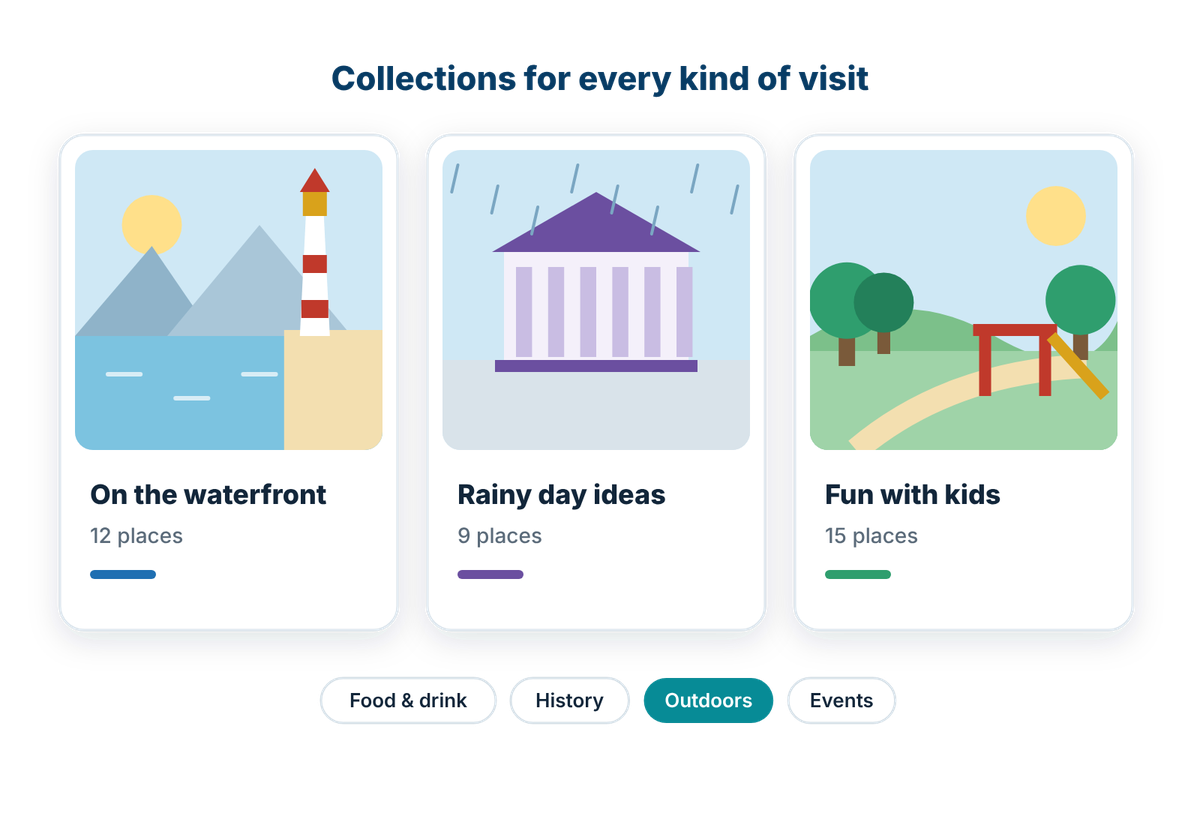
Help people discover the community through themes, interests, and local experiences.
Not every visitor begins with a specific destination in mind. Curated collections can bring related places, activities, events, and businesses together around a common theme, making it easier to explore the community in a more engaging and intuitive way.
Curated experiences should:
Interactive Discovery Map
TOOL
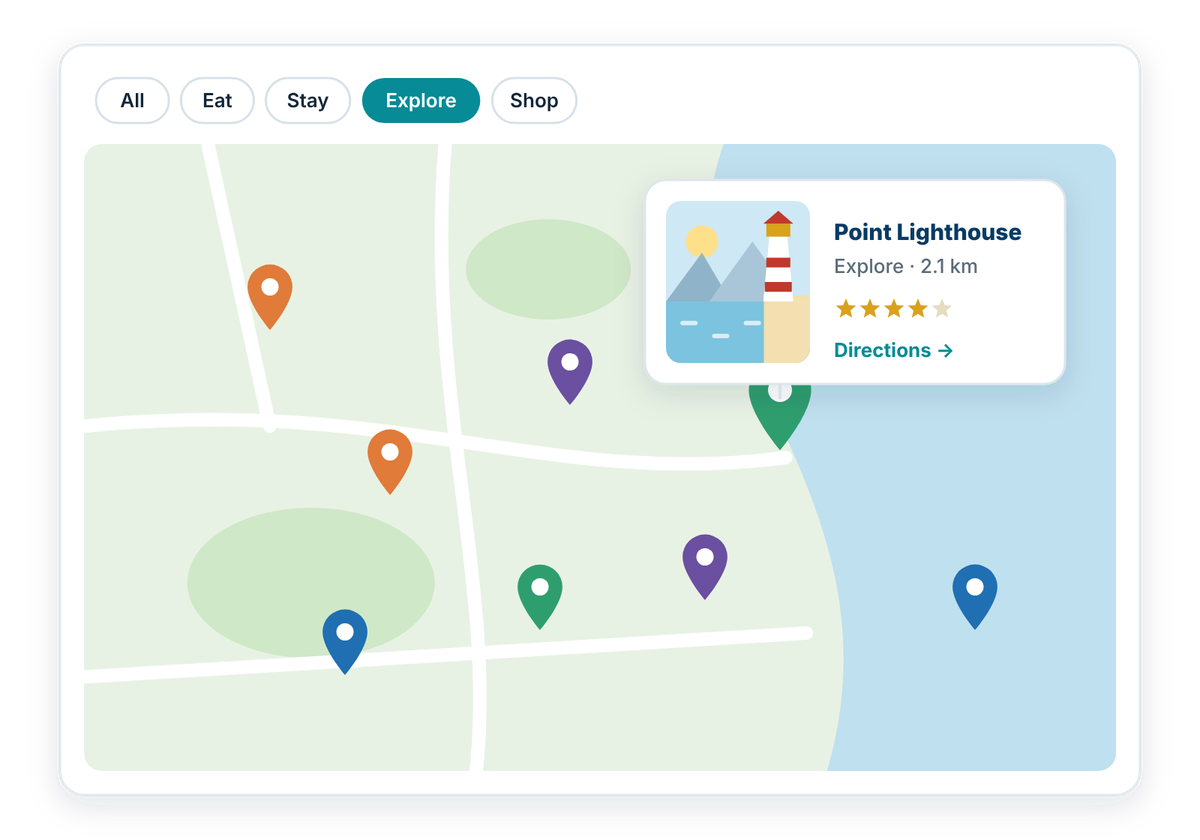
Help people explore the community visually and understand what is nearby.
An interactive discovery map can bring attractions, trails, businesses, accommodations, and other points of interest together in one place. Instead of searching for individual destinations, people can browse an area spatially and discover nearby experiences that fit naturally into their visit.
A discovery map should:
Itineraries & Trip Planning
TOOL
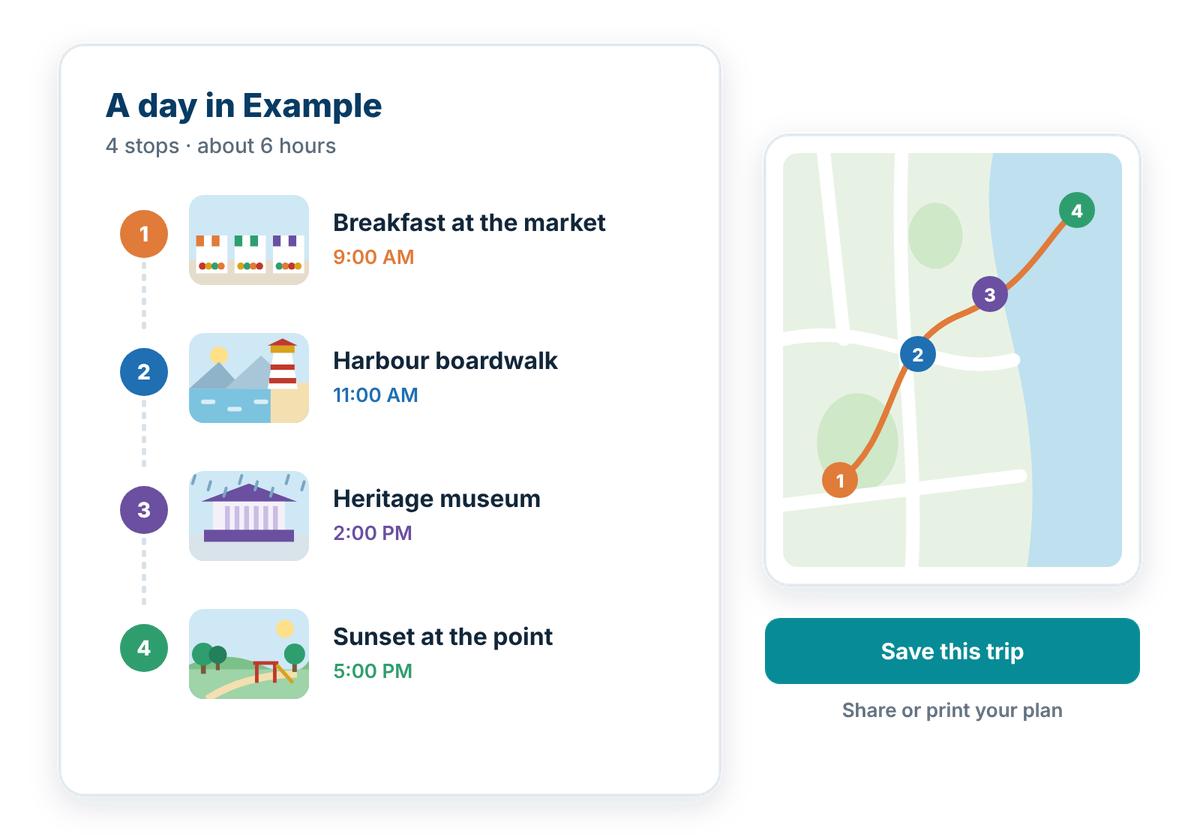
Help people turn discovery into a practical plan for their visit.
Once people find places and experiences that interest them, simple trip-planning tools can help bring those ideas together. Suggested itineraries, saved places, and connected stops can make it easier to plan a day, weekend, or themed visit without starting from scratch.
Trip-planning tools should:
Also consider
- Responsive & Mobile Design: make municipal websites work clearly and comfortably across different screen sizes and devices.
- Shared Listings & Aggregation: reuse the same local listings for visitors instead of keeping a separate list.
How well does your website work for residents?
Take the free check-up. In about 20 minutes you'll walk through everyday situations, like reporting a pothole or finding a council agenda, and get a plain-language check-up report of what's working and what to tackle first.