Community Economic Development
Help communities recognize their strengths, build local capacity, and turn opportunities into action.
Why it Matters
Community economic development is about more than attracting investment. Communities are often already rich in assets, ideas, skills, organizations, and local knowledge. Making those strengths more visible and connecting them with funding, support, and coordinated action can help communities build resilience, strengthen local economies, and create opportunities that reflect local priorities.
Can residents, businesses and community organizations find local development initiatives and understand how to contribute?
When it's working well
Local development initiatives, such as support-local programs, community improvement projects and partnerships, are described on one page. Each initiative explains its purpose, who can take part and how. Residents, businesses and organizations can propose ideas through a short form.
Where to start
Create one page that lists current development initiatives, with the purpose, a contact and how to take part for each. Link to partner organizations such as the chamber of commerce or regional development agency. Keep the page current as initiatives start and finish.
If you don't have this yet
A page of current initiatives, with an online form for proposing ideas, can usually be added to your current website. If a regional partner already promotes local programs, link to its listings instead of duplicating them.
Ideas that help
Community Assets & Opportunities
APPROACH
Help communities understand what they already have and where new opportunities may exist.
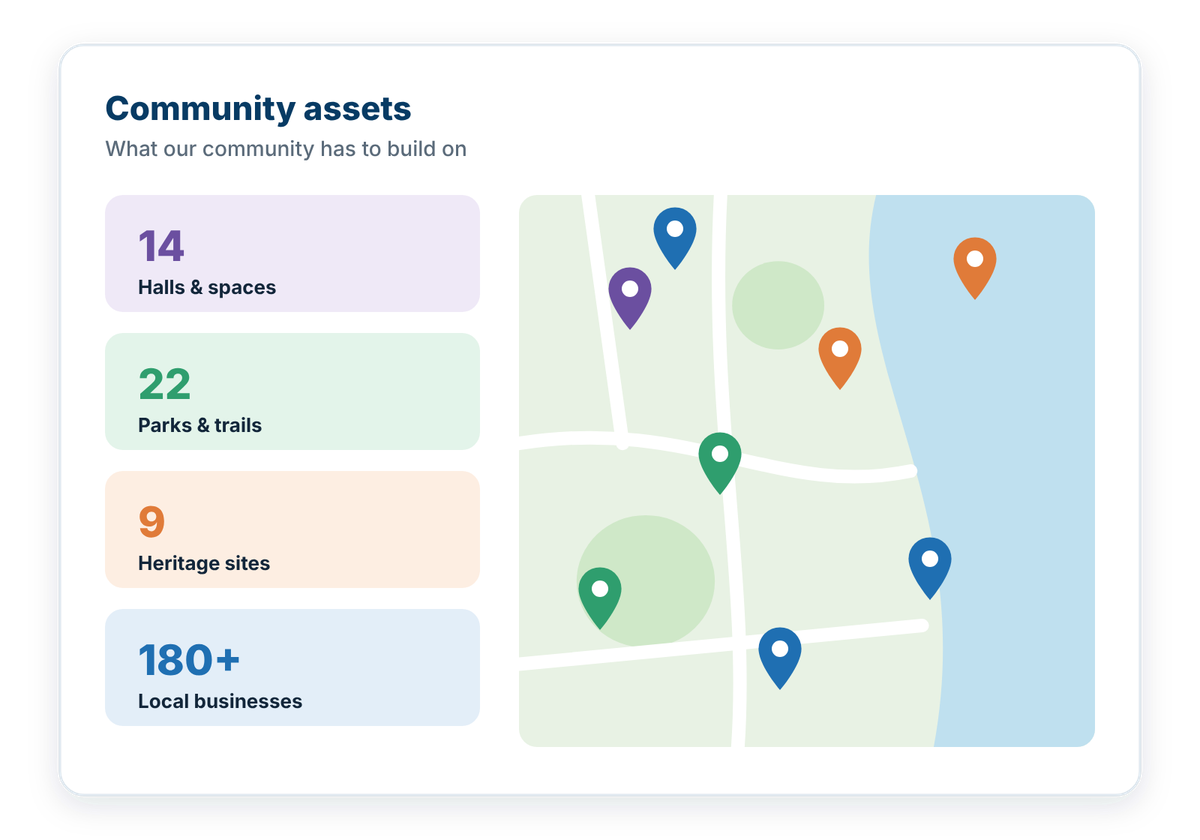
Community economic development often starts with identifying local strengths. Businesses, organizations, public spaces, infrastructure, skills, cultural assets, and natural features can all contribute to local opportunity when they are understood and connected more intentionally.
Asset information should:
Funding & Capacity Building
APPROACH
Help local organizations and initiatives find the resources they need to move ideas forward.
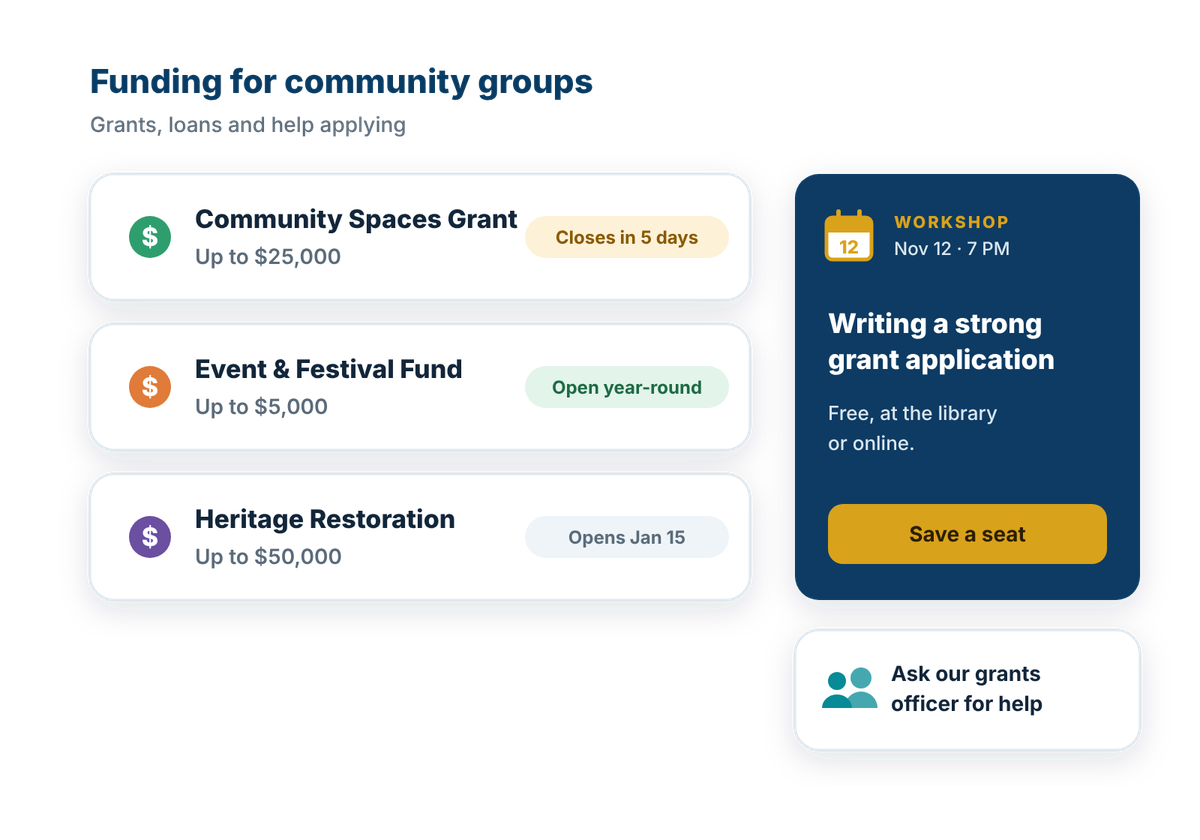
Community projects often depend on more than funding alone. Grants, training, technical support, partnerships, and practical guidance can all help local groups strengthen their capacity and turn promising ideas into achievable projects.
Capacity-building support should:
Development Initiatives & Progress
APPROACH
Show how community economic development priorities are moving from ideas into action.
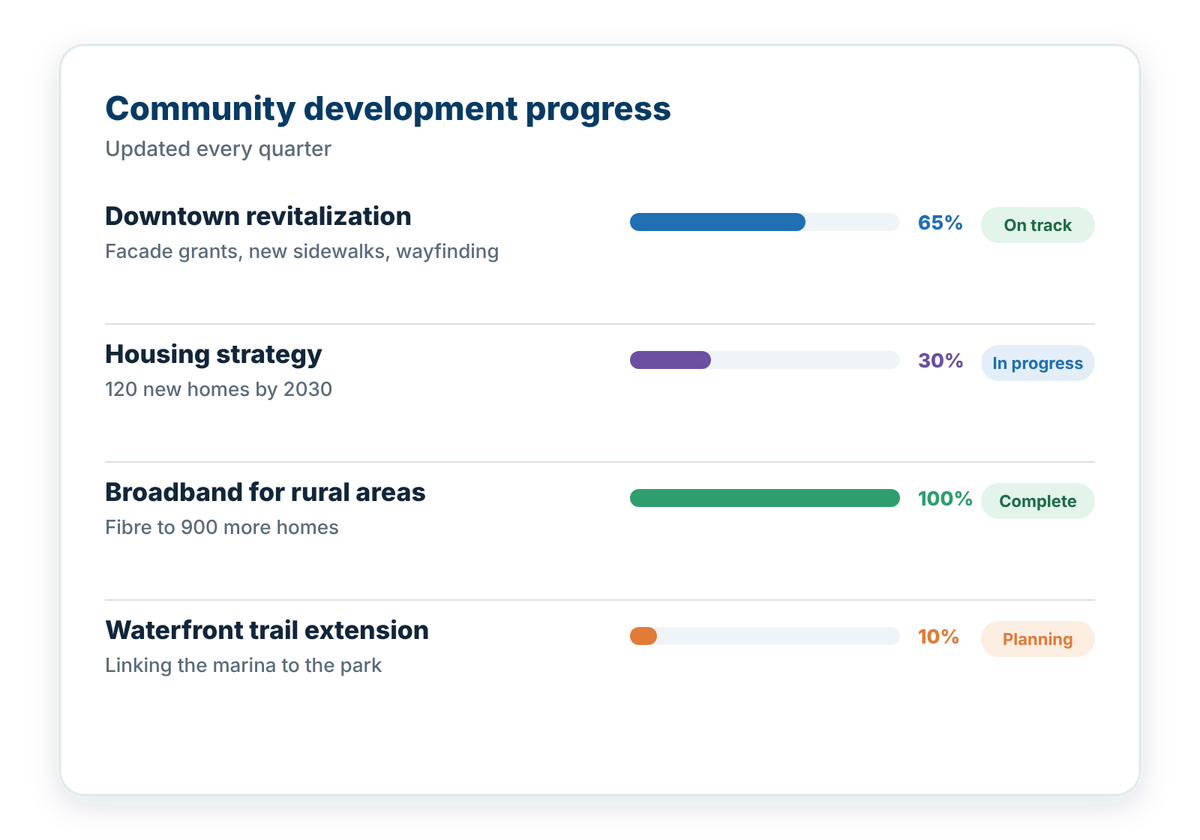
Local development often involves multiple projects, partners, and stages of work. Clear information about active initiatives, milestones, and outcomes can help people understand what is underway, where progress is being made, and how different efforts connect to broader community goals.
Development initiatives should:
Also consider
- Business & Investment Resources: help individual businesses and investors find programs, support and contacts.
How well does your website work for residents?
Take the free check-up. In about 20 minutes you'll walk through everyday situations, like reporting a pothole or finding a council agenda, and get a plain-language check-up report of what's working and what to tackle first.