
AI & Your Website
Help AI give residents accurate answers about your municipality, and use it where it genuinely saves time.
Why it Matters
More residents now ask AI assistants instead of searching your website, and those answers are only as good as what you publish. Clear, current pages help AI get it right. A few careful uses of AI can also save staff time, as long as people check the results and personal information stays protected.
When checked against your published information, do AI assistants provide accurate answers to common questions about your municipality?
When it's working well
AI assistants give accurate answers about your municipality because your site is clear, current and easy to read. Key facts like dates, fees and contacts are written as text, not only in PDFs or images.
A quick win
Ask two or three AI assistants your most common resident questions and record any incorrect answers. Update the pages they likely drew from, so dates, fees and contacts are current and written as text. Check again every few months.
Ideas that help
Answers from your own content
OPTIONAL AI TOOL
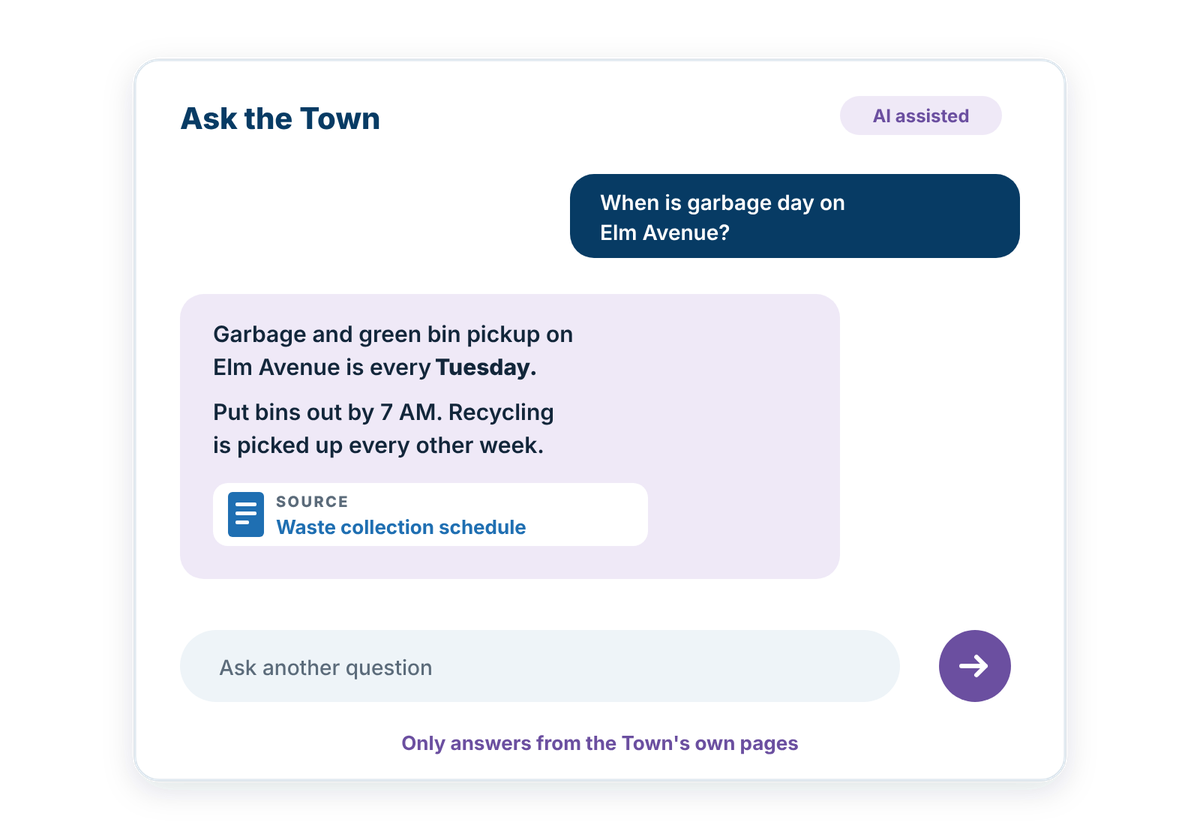
Help people get quick, accurate answers drawn only from your own website and documents.
Residents often ask the same questions in different words. Better search or an AI assistant can match those questions to the right page and give a short answer with a link to the source. It only works as well as the content underneath, so clear, current pages come first.
AI answers should:
Meeting and document summaries
OPTIONAL AI TOOL
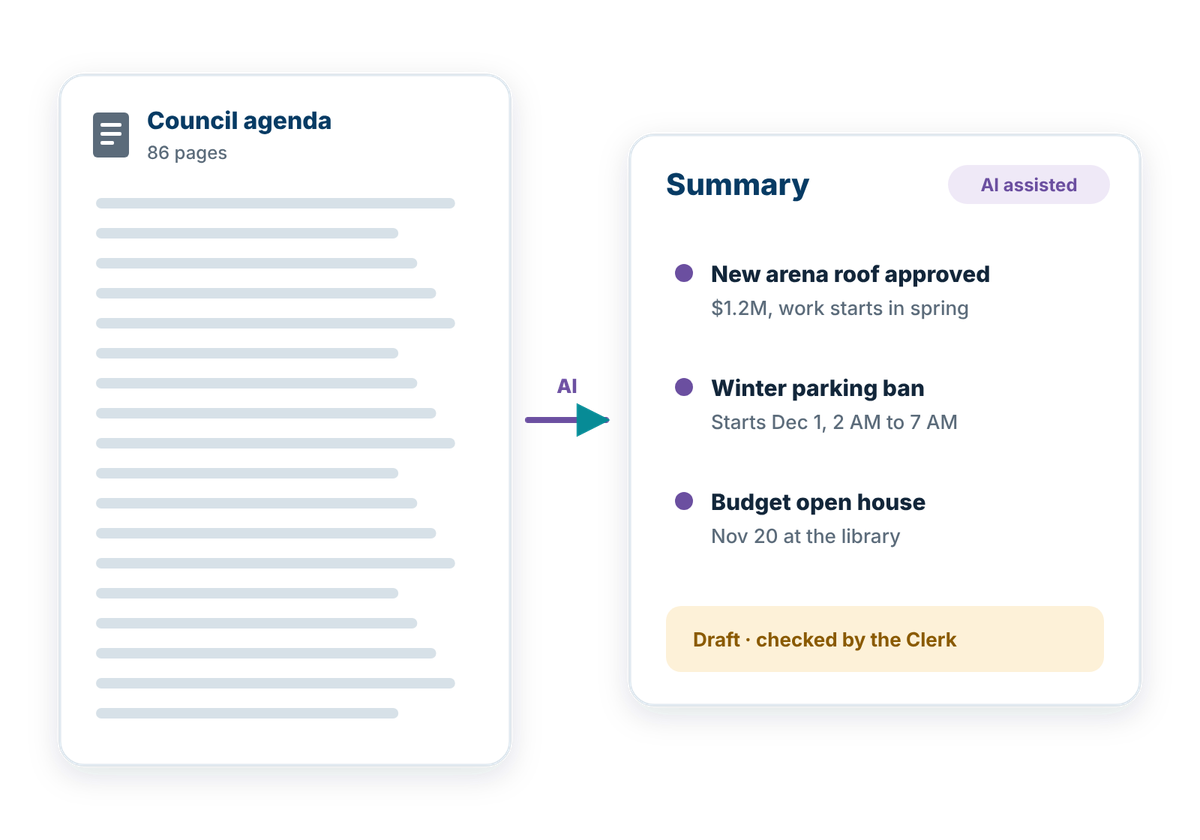
Help people understand long agendas, minutes and reports without reading every page.
Council packages and reports can run to hundreds of pages. AI can draft a short plain-language summary of what was discussed or decided, which staff check before it’s published. The full official record stays available alongside it.
AI summaries should:
Request triage
OPTIONAL AI TOOL
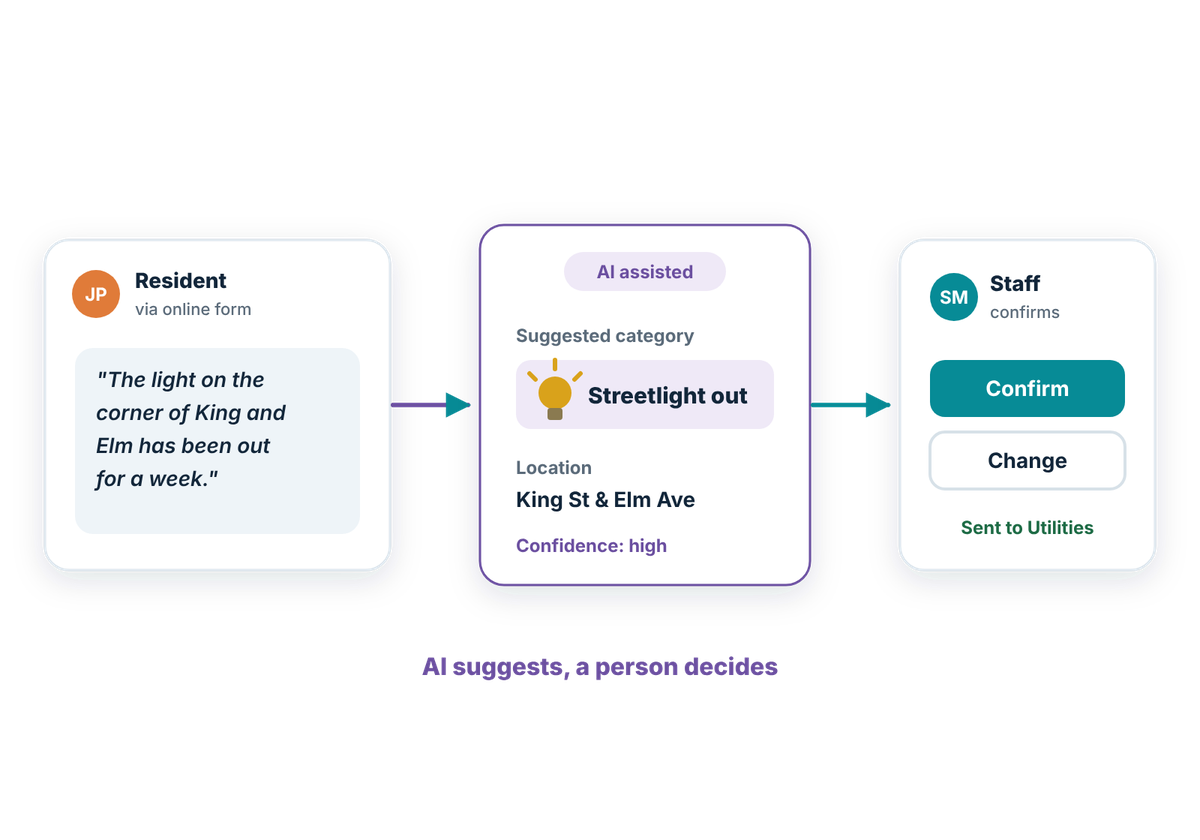
Help get each resident report to the right team, even when the wrong category is picked.
Residents describe problems in their own words and don’t always pick the right category. AI can suggest a category and team from the description or photo, so fewer requests sit in a general inbox. Staff stay in control and can correct any suggestion.
AI triage should:
Plain-language and translation help
OPTIONAL AI TOOL
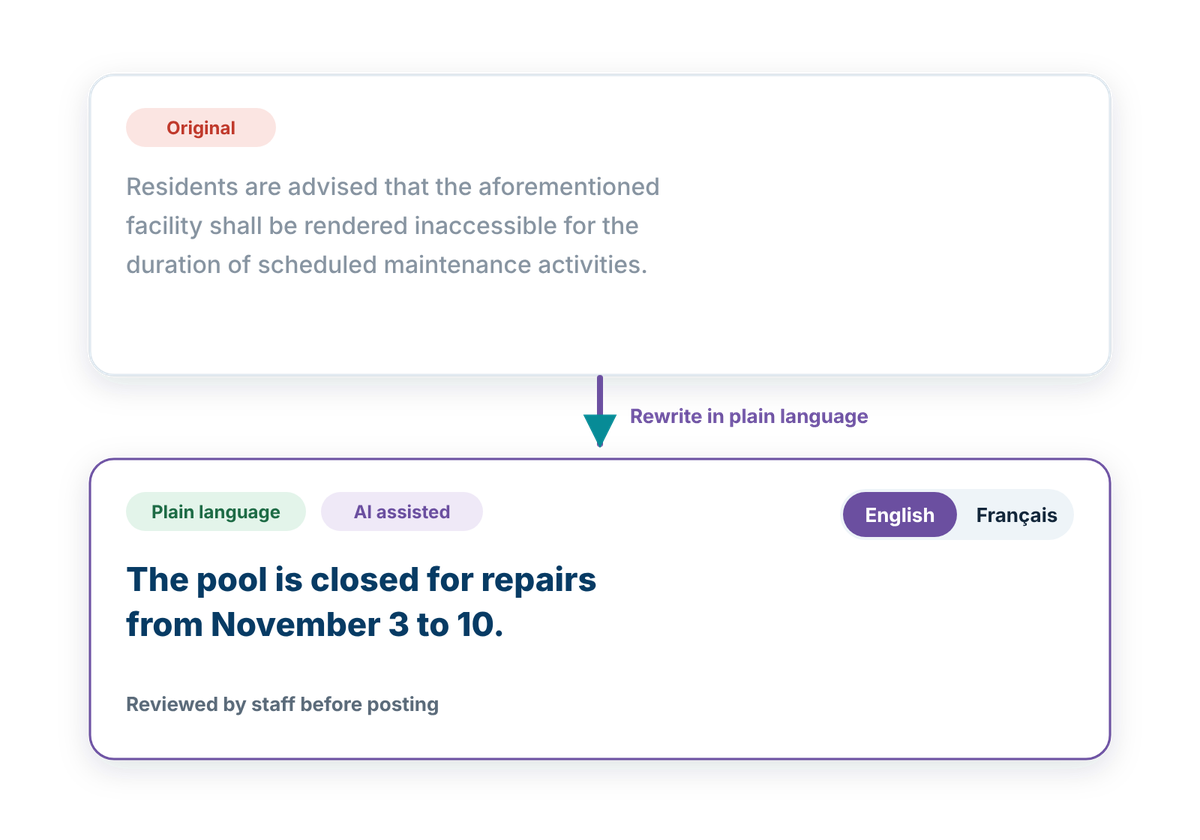
Help staff write clearer content and offer it in more than one language.
Writing in plain language takes practice, and translation can be slow and costly. AI can suggest simpler wording and draft translations while staff write. A person always reviews the result, especially for legal, safety or official content.
AI writing help should:
Foundations
AI use policy and data handling
FOUNDATION
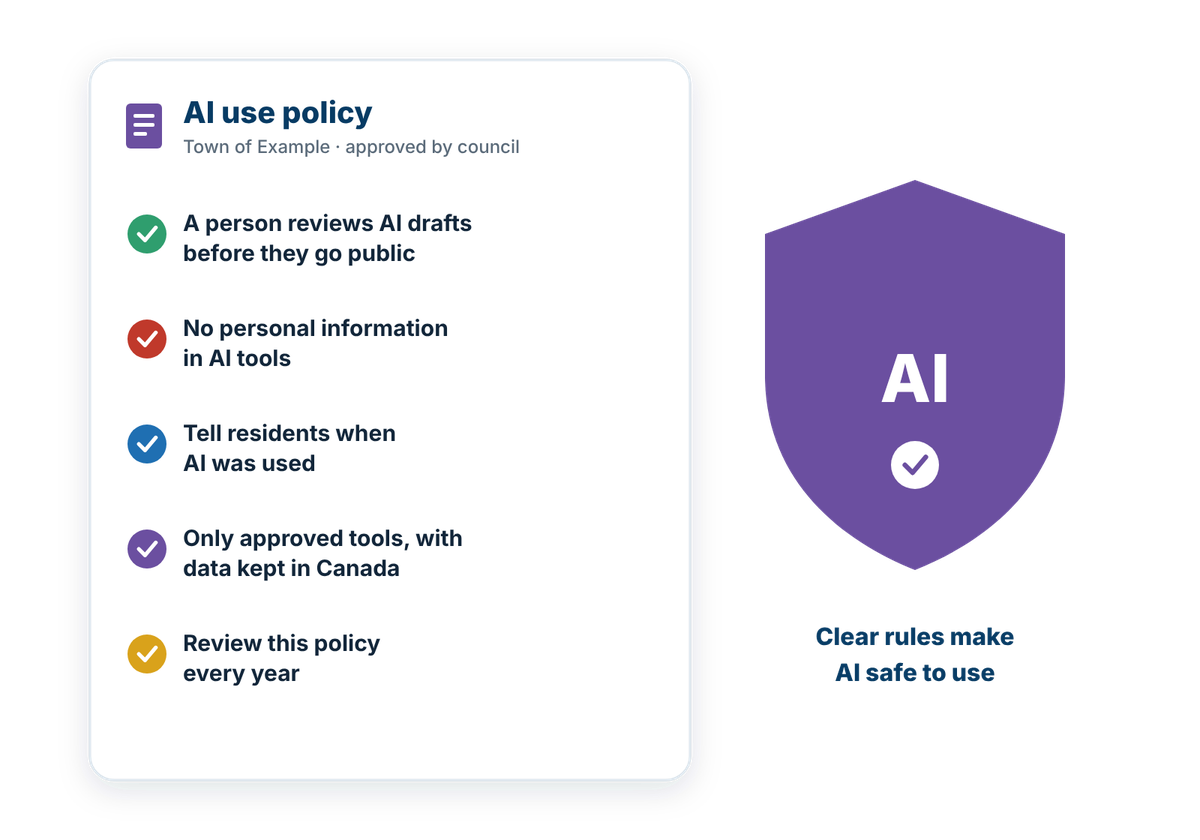
Set clear rules for how staff use AI and what information it can touch.
Staff may already be using AI tools for writing, summaries or research. A short policy helps them use these tools safely, protects residents’ personal information, and makes clear who is responsible for what gets published.
Things to consider:
Also consider
- Content Ownership & Maintenance: keep website content current by making ownership, review, and maintenance part of the publishing process.
How well does your website work for residents?
Take the free check-up. In about 20 minutes you'll walk through everyday situations, like reporting a pothole or finding a council agenda, and get a plain-language check-up report of what's working and what to tackle first.