Public Engagement
Help people share their perspectives, contribute ideas, and participate in decisions that affect their community.
Why it Matters
People are more likely to participate when engagement opportunities are easy to understand, easy to access, and clearly connected to real decisions. A thoughtful approach can help municipalities gather more useful input, reach a wider range of voices, and show that public participation is part of how decisions are shaped.
Can people find opportunities to provide input on municipal matters and learn how their input was considered?
When it's working well
Each consultation has its own page explaining what is being decided, why input matters and the deadline. People can respond online in a few minutes. Afterwards, the same page shows what was heard and what was decided.
Where to start
Give each consultation one page with the background, key dates and how to participate. Keep surveys short and in plain language. When it closes, post a short "What we heard" summary and the decision on the same page.
If you don't have this yet
Online surveys and project pages can usually be added to your current website. A separate engagement platform is usually only worthwhile if you run several consultations a year.
Ideas that help
Surveys & Feedback
TOOL
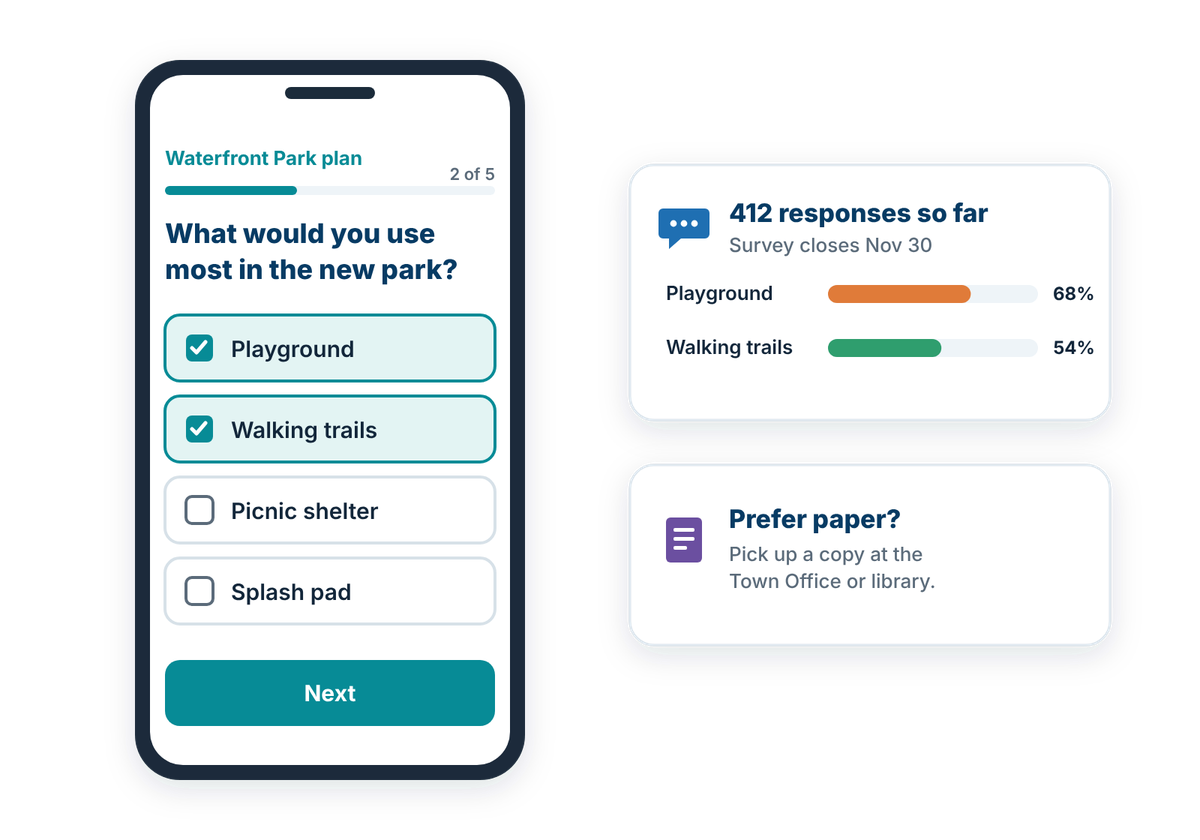
Give people clear, accessible ways to share input on municipal plans, projects, and decisions.
Public engagement works best when participation feels straightforward. Surveys, polls, comment forms, and other feedback tools can help municipalities gather structured input while still giving people space to explain their perspectives in their own words.
Engagement tools should:
Projects & Participation
APPROACH
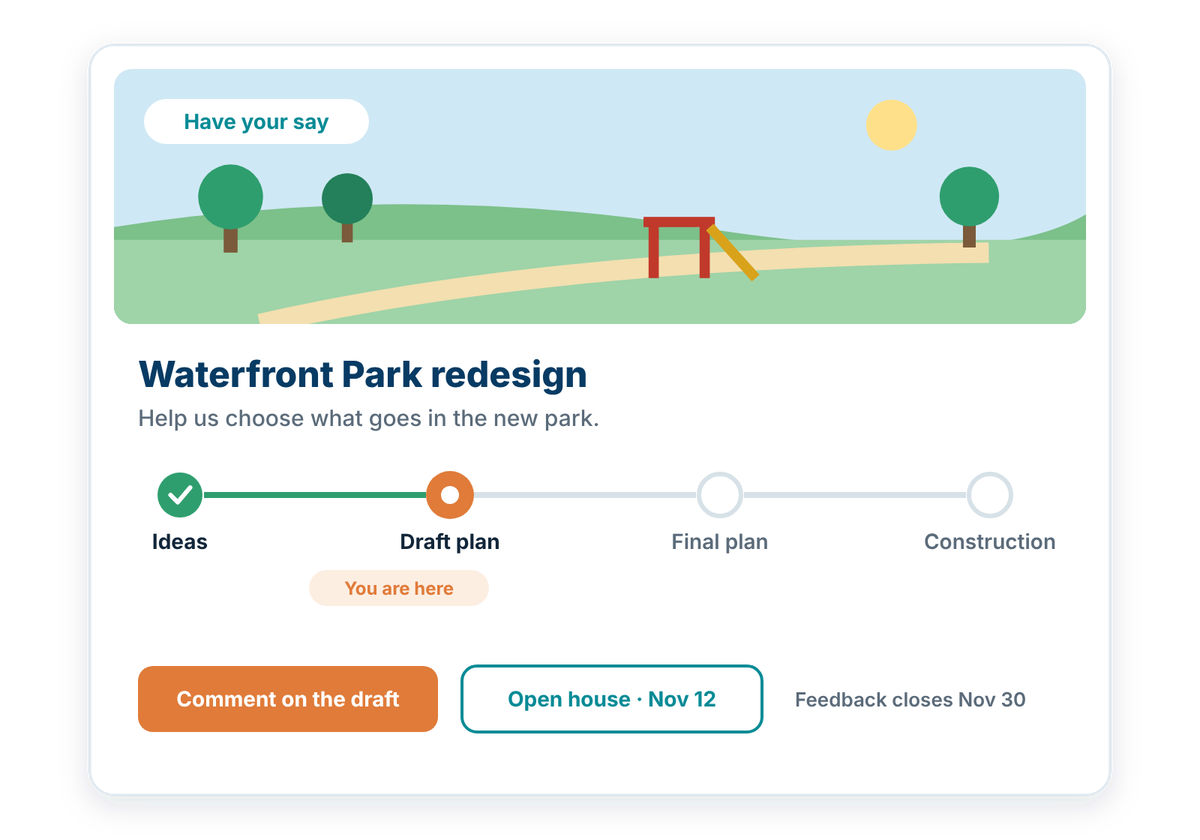
Bring project information, timelines, and ways to participate together in one place.
Public engagement is easier to follow when people can quickly understand what a project is about, why input is being requested, and how they can take part. Dedicated engagement pages can bring background information, key dates, documents, events, and participation opportunities into a single, clearer experience.
Project-related content should:
Results & Next Steps
APPROACH
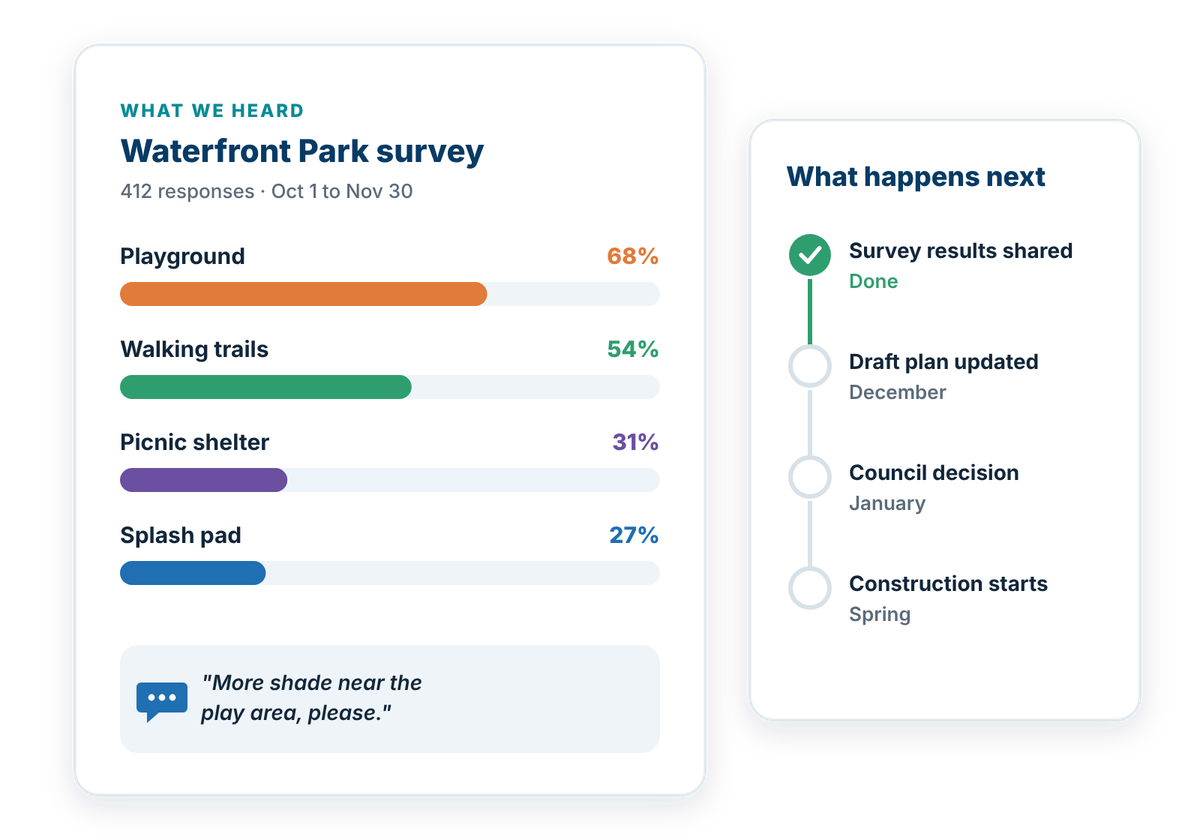
Show people what was heard, what changed, and what happens next.
Public engagement is more meaningful when people can see how their participation fits into the broader process. Clear summaries, decisions, and next steps can help close the loop and give participants confidence that their input was reviewed and considered.
Engagement results should:
Also consider
- Accessibility & Readability: make municipal content easier to perceive, understand, and use for people with different accessibility needs.
- Organization & Connected Records: connect engagement results to the council decisions and records they inform.
How well does your website work for residents?
Take the free check-up. In about 20 minutes you'll walk through everyday situations, like reporting a pothole or finding a council agenda, and get a plain-language check-up report of what's working and what to tackle first.